What do the most resilient families have in common? It’s not what you’d expect. It’s not that they never argue. It’s not that their kids never melt down, fail a test, or come home devastated after a
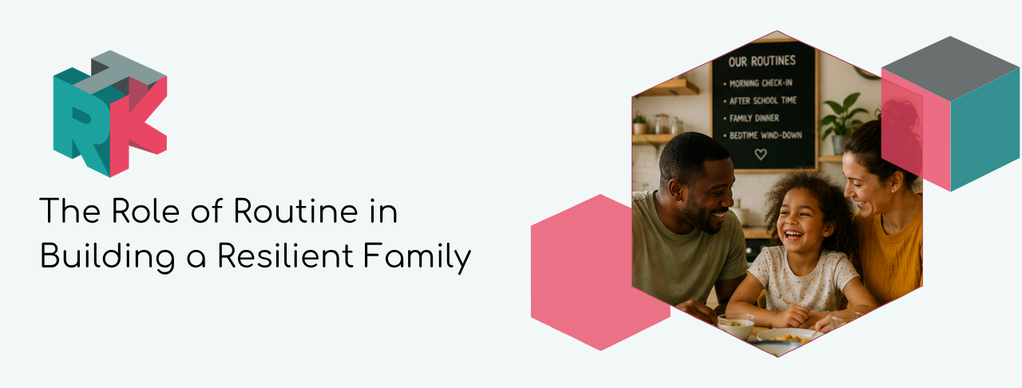
What do the most resilient families have in common? It’s not what you’d expect.
It’s not that they never argue. It’s not that their kids never melt down, fail a test, or come home devastated after a rough day. It’s not that the parents have everything figured out.
What resilient families share is something far more ordinary — and far more powerful: they have routines.
Not rigid, military-style schedules. Not colour-coded planners or perfectly timed mornings. Just reliable, predictable rhythms that their kids can count on, day after day.
It sounds almost too simple. But the science backs it up — and once you understand why routine works, you’ll never look at your morning chaos the same way again.
Why Routine Is a Resilience Tool, Not a Control Tool
Here’s what’s happening in your child’s brain when life feels unpredictable: their stress response kicks in.
The brain’s threat-detection system — the amygdala — lights up when it cannot anticipate what comes next. And a chronically activated stress response makes it much harder for children to regulate emotions, solve problems, and bounce back from setbacks.
Routine is the antidote.
When children know what to expect, their nervous system can relax. That sense of safety gives them the mental and emotional bandwidth to take risks, handle disappointment, and try again after they fail — which is the very definition of resilience.
In other words, routine does not limit your child. It frees them.
The Difference Between a Rigid Schedule and a Flexible Routine
Before we go any further, let’s clear something up — because this is where a lot of parents get tripped up.
A rigid schedule breaks the moment life doesn’t cooperate (and life never cooperates for long). A flexible routine is about the sequence and rhythm of things, not the exact timing.
A resilient family’s routine might look like:
- We always eat dinner together, even if it’s at 5pm one night and 7pm the next.
- We always do a quick check-in before bed, even if it’s just two minutes.
- We always have a wind-down period before sleep, even if bedtime shifts.
The what stays consistent. The when has room to breathe.
The Four Anchor Routines That Matter Most
You do not need to routine-ify every hour of the day.
Research and family therapists consistently point to four key transition moments where predictable routines make the biggest difference.
1. The Morning Routine
Mornings set the emotional tone for the entire day.
A chaotic morning sends children into school already dysregulated — anxious, reactive, and less able to cope with challenges.
Practical Tips
- Lay out clothes, pack bags, and prep lunches the night before.
- Build in a 10-minute buffer. Rushing is the enemy of calm mornings.
- Create a simple visual checklist for younger children.
- Keep the vibe low-key — soft music, minimal conflict, fewer screens.
2. The After-School Routine
The after-school window is often overlooked, but it is critical.
Children have been “holding it together” all day. They need a predictable decompression period before they can engage, share, or focus on homework.
Practical Tips
- Give them time to decompress before asking lots of questions.
- Create a simple sequence: snack → downtime → homework → activities.
- Use easy check-in questions like: “What was the best part of your day?” and “What was the hardest?”
3. The Dinner Routine
Family dinner does not need to be elaborate or happen every single night — but when it does happen, it should feel meaningful.
Research consistently shows that regular family meals are one of the strongest predictors of positive outcomes in children and teens.
Practical Tips
- Keep phones away from the table — including yours.
- Use conversation starters like “Rose, Bud, Thorn”.
- Let children contribute by helping set the table or serve food.
- Keep the dinner table warm and low-pressure rather than turning it into a lecture space.
4. The Bedtime Routine
This one is non-negotiable for resilience.
Sleep is when the brain processes and consolidates experiences — including difficult ones. A good bedtime routine creates a safe container to end the day.
Practical Tips
- Start winding down 30–45 minutes before sleep.
- Create a consistent sequence: bath/shower → pyjamas → reading or quiet time → lights out.
- Build in a short connection moment before bed.
- For teens, even a predictable no-phone wind-down routine can make a huge difference.
Involve Your Children in Building the Routine
One of the best things you can do is build routines with your children, not just impose them on them.
When children help shape routines, they develop a sense of ownership and control — and that sense of agency is itself a resilience skill.
Try asking:
- “What would make mornings feel easier?”
- “What would make bedtime less stressful?”
You might be surprised by the answers — and children are far more likely to stick to routines they helped create.
When Routines Break Down (And They Will)
Moves, illness, divorce, school transitions, new siblings — life disrupts routines. That is normal.
And it is important to say that out loud to your children too.
When Things Feel Chaotic
- Name what is happening: “Things feel a bit chaotic right now because of…”
- Keep one or two anchor routines wherever possible — especially bedtime.
- Rebuild together once things settle.
The ability to rebuild after disruption is resilience.
A Simple Place to Start
If all of this feels overwhelming, do not try to overhaul everything at once.
Pick one routine — just one — and commit to it for two weeks.
Most families find bedtime is the highest-leverage place to begin because it naturally creates opportunities for calm, connection, and conversation.
Start small. Stay consistent. Watch what changes.
The Bottom Line
Resilience is not built in the big, dramatic moments.
It is built in the ordinary ones.
In the predictable rhythm of a Tuesday morning. In the question you ask every night at dinner. In the five minutes you sit on the edge of the bed before lights out.
Routine tells your child:
This family is stable. You are safe. And no matter what happens out there, you can count on us in here.
That is not just structure.
That is the foundation of a resilient life.
Want More Support?
Want more practical tools for raising resilient children?
Explore our resources, programmes, and workshops designed to help families build the skills that last.

No comments yet. Login to start a new discussion Start a new discussion