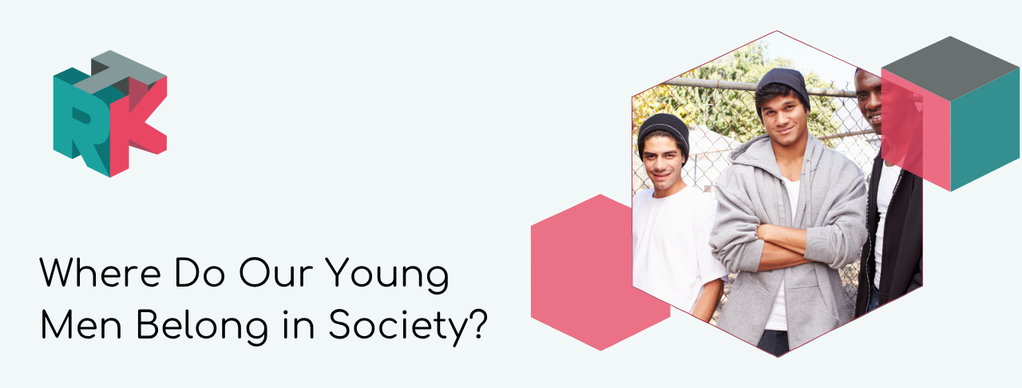
Where do boys and young men find belonging in a world sending them increasingly conflicting messages about what it means to be male? Following a conversation with Sarah Vogel on The Resilient Kid Podc
In recent years, the question “Where do our young men belong in society?” has become more urgent than ever. With rising concerns around masculinity, mental health, belonging, and emotional wellbeing, it’s time we have an open conversation—one that includes parents, carers, educators, and, most importantly, the boys themselves.
On The Resilient Kid podcast, I had the pleasure of welcoming back Sarah Vogel for a powerful and much-needed discussion about the pressures our boys are facing and how we, as a society, can do better.
The Tightrope of Modern Masculinity
Our young men are walking a tightrope. On one side, they’re told to “man up,” stay tough, and build muscle—cue the rise of “bigorexia,” a body dysmorphia driving boys toward unhealthy gym obsessions. On the other hand, many are raised in homes where feminist values are rightly celebrated. But somewhere along the line, some boys are left asking, “If feminism is only for girls, then what’s for me?”
Masculinity isn’t the enemy. Toxic masculinity is. And the real challenge is helping boys redefine masculinity on their terms—balancing strength with kindness, competitiveness with compassion, and independence with emotional expression.
The Impact of Role Models and Representation
From Scouts to sports teams to school life, one major theme came through in our conversation: boys need spaces and role models that reflect who they are and who they can become.
Sarah shared how her husband—who does the ironing, builds homes, and supports his daughters—noticed that traditional male-only spaces like Scouts are disappearing. Boys need somewhere to be themselves. Somewhere, they’re not always compared, judged, or told to sit still and be quiet.
It’s not about excluding girls. It’s about creating intentional spaces for boys to build identity, confidence, and connection with safe male role models—whether that’s a dad, coach, teacher, grandparent, or community leader.
School: Broken Systems, Missed Opportunities
Between the ages of 6 and 14, boys are looking for belonging. If they don’t find it in healthy environments, they’ll seek it elsewhere—often online.
Algorithms don’t care about emotional well-being. Social media and gaming platforms often reward aggression, dominance, and risk-taking. Without digital literacy and critical thinking skills, boys are vulnerable to toxic messages and dangerous ideologies.
What if schools taught boys how to analyse what they’re seeing and question who’s behind the content? What if we built classrooms where it’s OK to move, take safe risks, and talk about emotions without shame?
Parenting for Belonging
Home is where the heart is—and it’s also where belonging begins.
Do your boys have a seat at the table? Do they help around the house? Can they express themselves without fear of judgment?
These are simple questions that carry big weight. Because when kids don’t feel needed or seen at home, they’ll go searching for that identity elsewhere. As parents, it’s not about being perfect. It’s about staying connected, asking questions like, “What can I do to support you with this?” and remembering that boundaries build trust.
Healthy Masculinity Is Kindness, Courage, and Connection
What we truly want for our boys is balance.
Let them lift weights and their friends’ spirits. Let them take risks and show respect. Let them love dance, drama, football, or Fortnite—whatever lights them up. Let them cry without shame. Let them feel.
Healthy masculinity is not about being less emotional—it’s about being emotionally educated. It’s about self-awareness, asking for help, and lifting each other up.
Sarah and I both agreed: one strong, supportive adult can change a young person’s life. That adult could be you.
So, What Can We Do as a Society?
-
Create safe spaces for boys—online and offline—to explore identity, belonging, and emotions.
-
Champion critical thinking in schools so boys can recognise harmful content and choose healthier narratives.
-
Reclaim positive masculinity, showing boys that strength and sensitivity are not opposites.
-
Foster community initiatives like men's mental health groups, dad clubs, or mentoring schemes.
-
Have the conversation around the dinner table, in classrooms, and in communities.
Because if we don’t talk to our boys, someone else will.
Join The Village: Our Safe Space for Parents and Carers
If this conversation resonated with you, come and join us in The Village—our free Facebook community for parents, carers, educators, and anyone who cares deeply about raising resilient kids.
This is where we share support, swap stories, and have real conversations about what’s going on in our kids’ lives.
👉 Join The Village now and let’s keep the conversation going.

Ashley Costello
Ashley is the founder of The Resilient Kid and The Resilient Academy, an experienced psychotherapist with over 30 years of experience supporting children, young people and families. As an author, TEDx speaker, podcaster and mum of two, Ashley is passionate about helping children understand their emotions, build confidence and develop lifelong resilience. Through her work with families, schools and Resilient Kid Coaches, she is on a mission to make emotional wellbeing support accessible to more children, empowering the adults around them to create environments where they feel safe, connected and able to thrive. Find out more about Ashley and her work: https://theresilienthub.co.uk/trh-coaches/ashley
No comments yet. Login to start a new discussion Start a new discussion