5 Simple Daily Activities You know that moment when your kid's tower of blocks falls over for the third time, and instead of rebuilding it, they dramatically flop onto the floor declaring they'll "ne
5 Simple Daily Activities
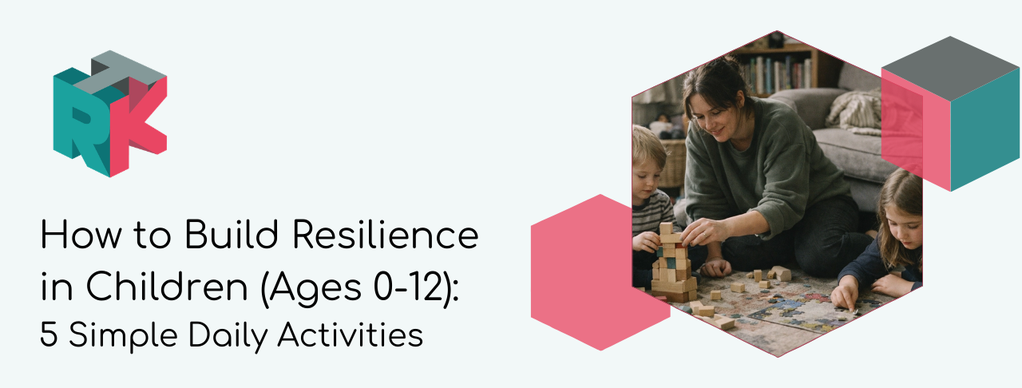
You know that moment when your kid's tower of blocks falls over for the third time, and instead of rebuilding it, they dramatically flop onto the floor declaring they'll "never build anything ever again"?
Yeah, we've all been there.
Here's the thing: resilience isn't something kids are just born with (no matter what those Instagram parents want you to believe). It's a skill we can help them build, one tiny moment at a time. And the good news? You don't need fancy programs or expensive classes. You just need a few simple daily activities that actually fit into real life.
Before we dive in, if you're wondering how to build resilience through connection (without adding another “big thing” to your to-do list), try our Primary Aged Connection Challenge. It’s a simple, practical way to strengthen your relationship and support resilience at the same time.
What Does Resilience Actually Mean?
Think of resilience as your child's emotional shock absorbers. It's their ability to bounce back when things go sideways, whether that's a failed maths test, a friendship falling apart, or just not getting picked for the football team.
Resilient kids don't avoid hard feelings or pretend everything's fine. They feel the disappointment, work through it, and come out the other side thinking, "Okay, what's next?" That's the skill we're building here.

1. Problem-Solving Play (AKA: Let Them Struggle a Bit)
I know, I know, watching your child struggle with something is uncomfortable. Every parenting instinct screams, "Just help them already!" But here's where the magic happens: when we step back and let kids work through challenges on their own, we're teaching them they're capable.
For younger kids (0-5):
- Shape sorters and simple puzzles (start with 4-6 pieces)
- Stacking rings or blocks
- Nesting cups
For primary-aged kids (6-12):
- Age-appropriate jigsaw puzzles
- Building sets like LEGO (make LEGO)
- Strategy games like checkers or Connect Four
The key move: When they get frustrated, resist the urge to jump in immediately. Instead, try: "That looks tricky. What else could you try?" or "I wonder what would happen if you turned that piece around?"
You're basically teaching their brain that "stuck" doesn't mean "done", it just means "try something else."
2. Breathing Exercises (Yes, Even for Toddlers)
Before you roll your eyes thinking I'm going to suggest getting your energetic 4-year-old to sit in lotus position for meditation: hang on. Breathing exercises for kids look nothing like adult meditation, and they work surprisingly well.

For little ones (0-5):
- Bubble breathing: Blow bubbles slowly (it forces them to take slow breaths)
- Teddy belly breathing: Have them lie down with a stuffed animal on their belly and watch it rise and fall
- Birthday candles: Pretend to blow out candles on an invisible cake
For older kids (6-12):
- Volcano breaths: Raise arms up as they breathe in, push them down as they breathe out
- Back-to-back breathing: Sit back-to-back and try to sync your breathing
- The balloon technique: Breathe in and expand like a balloon, then slowly let the air out
Why does this matter for resilience? Because when kids have a tool to calm their nervous system down, they can think more clearly during tough moments. It's the difference between a complete meltdown and a manageable wobble.
Practice these when everyone's calm: maybe before bedtime or during breakfast, so the skill's already there when they actually need it.
3. Emotion Detective Work
Here's something that might surprise you: kids who can name their emotions bounce back from setbacks faster. It's not just about being "in touch with feelings": it's about giving their brain the tools to process what's happening.
Daily emotion check-ins:
Make it part of your routine. At dinner or bedtime, ask: "What emotion did you feel most today?" Keep an emotion chart handy if that helps (you can find free printables online or grab one from our shop).

For younger kids (0-5):
- Draw emotion faces together: what does grumpy look like? What about excited?
- Use a feelings wheel with pictures
- Read books that explore different emotions (The Colour Monster is brilliant for this)
For older kids (6-12):
- Keep an emotion journal with simple prompts
- Play emotion charades
- Use the "glitter jar" metaphor: shake it up (that's when we're upset), then watch it settle (that's our brain calming down)
The magic phrase to use: "It's okay to feel [emotion]. Let's figure out what to do with that feeling."
You're teaching them that all emotions are normal: it's what we do with them that matters.
4. Obstacle Courses and Physical Challenges
Getting physical isn't just about burning energy (though let's be honest, that's a nice bonus). Physical challenges teach kids that they can do hard things, adjust when plans change, and keep going even when they're tired.
Indoor obstacle course ideas:
- Jump from pillow to pillow without touching the "lava" (floor)
- Crawl under chairs
- Balance along a line of tape on the floor
- Throw softballs into a bucket
Outdoor options:
- Create a nature obstacle course at the park
- Time trials (how fast can you run to that tree and back?)
- Climbing frames and monkey bars
The resilience boost: Change the rules halfway through. "Now you have to hop on one foot!" or "This time, go backwards!" It sounds mean, but you're teaching flexible thinking: when plan A doesn't work, switch to plan B.
Celebrate effort, not just success: "You kept trying even though that was really hard!" matters more than "You won!"

5. Cooking and Age-Appropriate Chores
Stay with me here: I know "chores" isn't the most exciting word. But involving kids in real-world tasks is secretly one of the best resilience-builders out there.
Why it works:
- They see cause and effect (if I don't put ingredients in, the cake doesn't work)
- They experience manageable failure in a safe environment
- They learn to persist through tasks they don't particularly enjoy
- They get a confidence boost from contributing to the family
Age-appropriate tasks:
Toddlers (2-4):
- Stirring ingredients in a bowl
- Tearing lettuce for salad
- Putting toys in a basket
- Wiping their own table space
Early primary (5-7):
- Making their own sandwich
- Setting the table
- Sorting laundry by colour
- Watering plants
Older primary (8-12):
- Following a simple recipe start to finish
- Making their own breakfast
- Packing their school bag the night before
- Folding and putting away their laundry
The crucial bit: Let them mess up. Burnt toast? Spilt flour? Mismatched socks? That's all part of learning that mistakes aren't catastrophic: they're just information about what to try differently next time.
Making It Actually Happen
Look, I get it. You're already juggling seventeen things before 8 am. The last thing you need is a complicated resilience-building programme that requires Pinterest-level planning.
So here's what I'd suggest: Pick one activity and stick with it for a week. That's it. Not all five at once. Just one.
Maybe it's doing emotion check-ins at dinner. Or setting up a quick pillow obstacle course on Saturday mornings. Or letting your kid crack the eggs for scrambled eggs (even though it'll definitely get shells in there the first few times).
Small, consistent moments build resilience way more effectively than big, occasional efforts.
Your Turn
Building resilience in kids isn't about wrapping them in cotton wool or throwing them in the deep end. It's about giving them tools, letting them practice in safe situations, and being there to dust them off when they fall.
These five daily activities aren't magic bullets: but they are proven ways to help your child develop the mental and emotional muscles they'll need for whatever life throws at them.
Want a really simple way to build resilience through connection this week? Try our Primary Aged Connection Challenge for easy, doable prompts that help you strengthen your bond with your child (and boost resilience along the way).
And remember: you don't have to be perfect at this. Just being intentional about building these skills puts you way ahead of the game. Your kid's going to face tough stuff: that's guaranteed. But with your support and these simple daily practices, they'll have what they need to bounce back.

Ashley Costello
Ashley is the founder of The Resilient Kid and The Resilient Academy, an experienced psychotherapist with over 30 years of experience supporting children, young people and families. As an author, TEDx speaker, podcaster and mum of two, Ashley is passionate about helping children understand their emotions, build confidence and develop lifelong resilience. Through her work with families, schools and Resilient Kid Coaches, she is on a mission to make emotional wellbeing support accessible to more children, empowering the adults around them to create environments where they feel safe, connected and able to thrive. Find out more about Ashley and her work: https://theresilienthub.co.uk/trh-coaches/ashley
No comments yet. Login to start a new discussion Start a new discussion